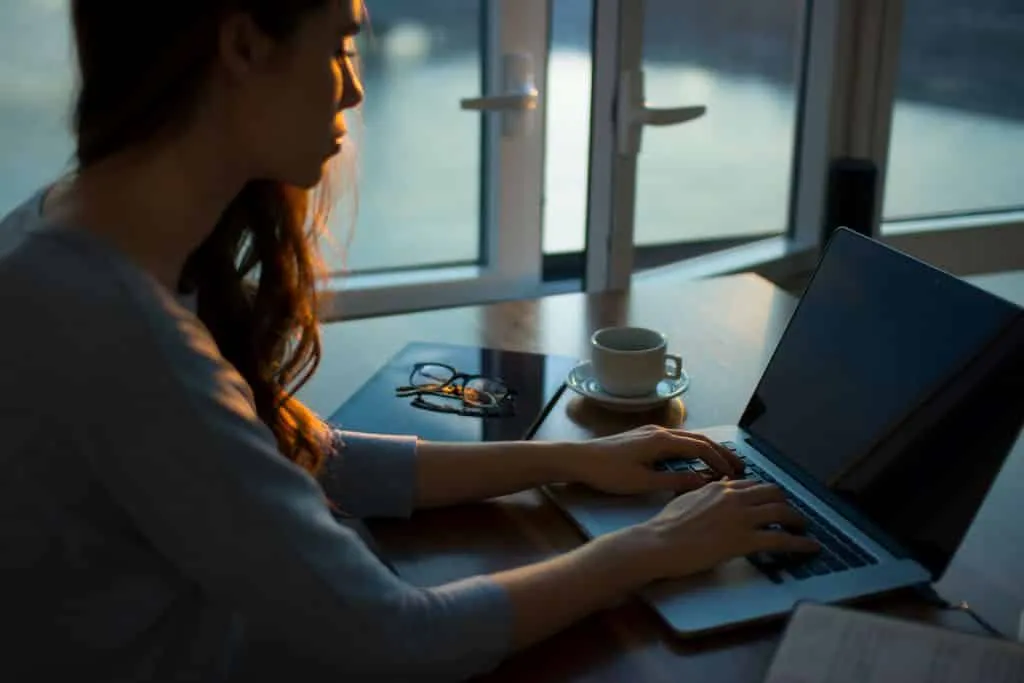
Getting started as a freelancer can seem impossible for many people, especially when fear of insecurity or even existential anxiety outweighs everything else.
But instead of diving in headfirst, freelancing can also be practiced optimally as a side job, while you remain financially secure through your main job. Whether freelancing stays a side activity or eventually becomes your main profession is up to each individual.
An additional source of income, a varied side activity or simply living out a passion - there are many reasons to choose freelancing alongside a full-time job. Especially at the beginning, there are a few things to keep in mind. Laura and Maria have both been through exactly this situation and started freelancing in parallel to their salaried jobs. To better understand the perspective of freelancers who work on the side, both colleagues agreed to give us an interview about their situation.
Starting freelancing as a side job
Maria works full-time in HR and also freelances as a UX and web designer. She got into freelance work through friends who asked her to design a website. Through recommendations she got more and more assignments and therefore decided to offer her services professionally on the side.
Laura worked in an advertising agency after training as a media designer. She currently has a permanent job in sales marketing with a 35-hour work week. She had already done a lot of private design work for friends and acquaintances, and after her boyfriend encouraged her even more, she started freelancing on the side. Above all, she missed the creative side in her main job, which she can now express through freelancing.
How does client acquisition work?
Especially at the beginning of freelancing, client acquisition is one of the most important tools for getting regular assignments. Thanks to recommendations, Maria does not have to worry too much about acquisition, because clients approached her from the very beginning.
Things work similarly for Laura, because friends and acquaintances keep asking her for new projects, so she still has no own marketing. In the future, however, she plans to have her own website, although there is not enough time to build it yet.
Typical leap into cold water or gradual transition?
For Maria, the process was not a leap into cold water, but rather an easy start. Because her main job covers all her costs, she sees her freelancing job more as a nice extra that mainly provides a welcome change from her main profession.
Laura would also describe her start as a gradual transition. Because she had already carried out smaller jobs for friends in the past, it was a creeping process for her. Her main job also gave her an easy entry, because the security she already had meant she did not have to risk much.
Balancing main and side jobs
When asked whether it sometimes becomes too much, Maria only partly agrees. On the one hand both jobs take a lot of time, but on the other hand she can choose projects based on her availability and, if necessary, decline requests. She wants to keep one day a week free, because breaks are important in order to come back more motivated afterwards.
Because Laura’s main job benefited from the coronavirus crisis, she currently has to work more than 35 hours a week there. Her freelance projects are currently limited to a few hours, mostly at weekends, which makes both jobs manageable side by side. This is mainly possible because she can organize her freelancing projects well and flexibly.
How the main employer reacts
Regarding her employer, Maria thinks it is important to talk about the side job from the beginning, because even if her employer was initially skeptical, in the end what matters is delivering the work well and on time. Her main job has not suffered from freelancing on the side, and especially now, due to the current home office situation, Maria can combine both jobs more effectively.
Laura’s boss has no problem with her self-employment on the side. Because she regularly receives good feedback for her work, that is also confirmation that nothing is being neglected.
Option to freelance full-time?
Whether Maria can imagine freelancing as her main source of income in the future, she does not yet know. However, if she had a stable client base and enough projects coming in, this would not be out of the question.
Laura likes the idea of freelancing. But since a house is currently being built, she would rather continue enjoying the financial security of her current main job. She could, however, imagine that re-entering the working world after having children would be a good opportunity to fully commit to freelancing.
In the end…
What Maria emphasizes at the end of the interview is that she generally finds it very difficult to find a part-time job in an academic field. Freelancing is therefore the best way for her to have a side job.
Laura concludes by saying that she really appreciates having a secure main job, especially during the coronavirus pandemic, at a time when everything seems rather uncertain.
Conclusion
As both interview partners show, freelancing on the side is a good way to earn extra money alongside a main job, live out creativity and organize time and work flexibly. Whether this experience will one day become the starting point for full-time freelancing, both women want to keep that open for the future.
Are you also interested in freelancing? Then get exciting insights from our blog!

![Agentic Engineering Hiring Interview 2026 [+21-Question PDF]](/_astro/agentic-engineering-interview-featured-de.BlvVAp5j_Z9ib7o.webp)