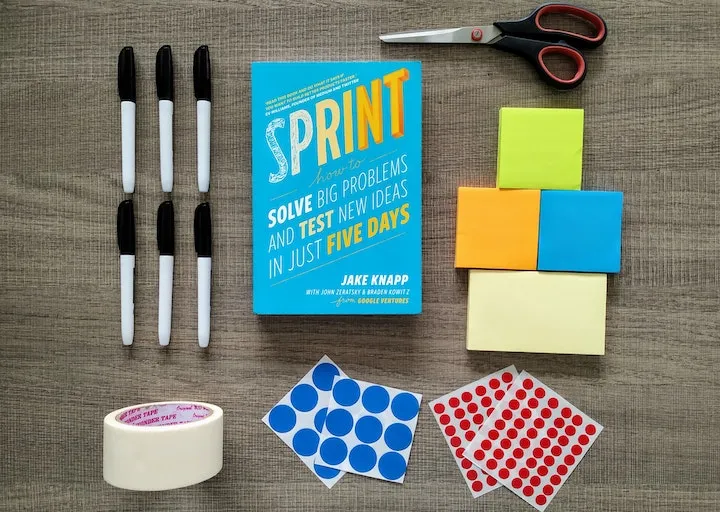
Sprints and agile work are on everyone’s lips. There are Google Sprints, Design Sprints, UX Sprints, Scrum Sprints… and also Design Thinking Sprints. But what exactly do these terms mean and what are the differences? This guest contribution by Mia Konew, co-founder of Dark Horse Innovation, sheds some light on the topic. She is an expert in innovation, Design Thinking and intrapreneurship. If you want to sound expert-level at your next business small talk, keep reading.
Sprint is a format, not a method
Numerous agencies and consultancies currently offer sprints, and every agile organization is sprinting. The sprint belongs to good form. But what exactly is a sprint and how do the different sprints differ?
Sprint is a format and comes from the Scrum approach (agile software development). It serves focused work without distraction or dispersion, with a clear result goal and within a predefined time frame. In a sprint, a team comes together for a fixed number of days in a row.
Is Design Thinking Sprint just another name for Google Sprint?
The Google Sprint, also called a Design Sprint or UX Sprint, is a step-by-step process for creating and evaluating new product ideas or further developments in just four to five days with an interdisciplinary team and users. It follows a fixed recipe that is clearly and precisely formulated and scheduled down to the hour. Duration, methods, results - everything is simply worked through and followed according to the very precise recipe.
So what is Design Thinking?
Design Thinking is the opposite of precision. The term originated in design research to describe the mindset of designers. Today, however, Design Thinking is often understood as the best-practice approach of the American product development company IDEO. It provides concrete recommendations for process, methods, collaboration and mindset in collaborative concept work.
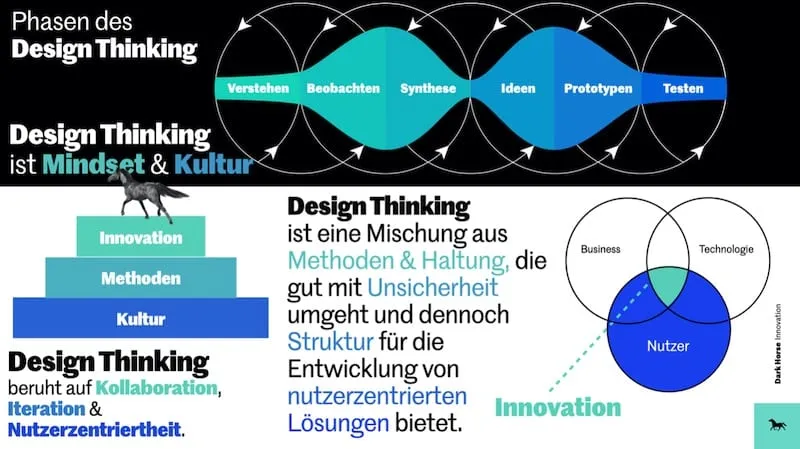
We define Design Thinking as a mix of methods and mindset that handles uncertainty well while still providing structure for developing user-centered solutions. Design Thinking is based on collaboration, iteration and user-centeredness and is usually applied in innovation contexts.
Sounds abstract? You can try Design Thinking here in 20 minutes: Try Design Thinking
Design Thinking is not a recipe, but the art of cooking
Compared with the Google Sprint, Design Thinking offers a mindset equipped with a broad and open toolbox. Based on the topic, situation and team, the “cook” decides which method is used, how long and for what purpose. Instead of following ingredients, instructions and processing steps, the focus is on the goal of hitting exactly the user’s taste. We are talking more about a range of coordinated skills in a person than about a recipe.
But we want to add one very important point to this debate: a Google Sprint does not start from the same point as a Design Thinking process.
The starting point matters: green field or green app?
If it is completely clear which problem we are addressing, for which user we are developing and if we perhaps already know the rough solution approach (app, software, digital service, etc.), then we have the elements for a Google Sprint and can start.
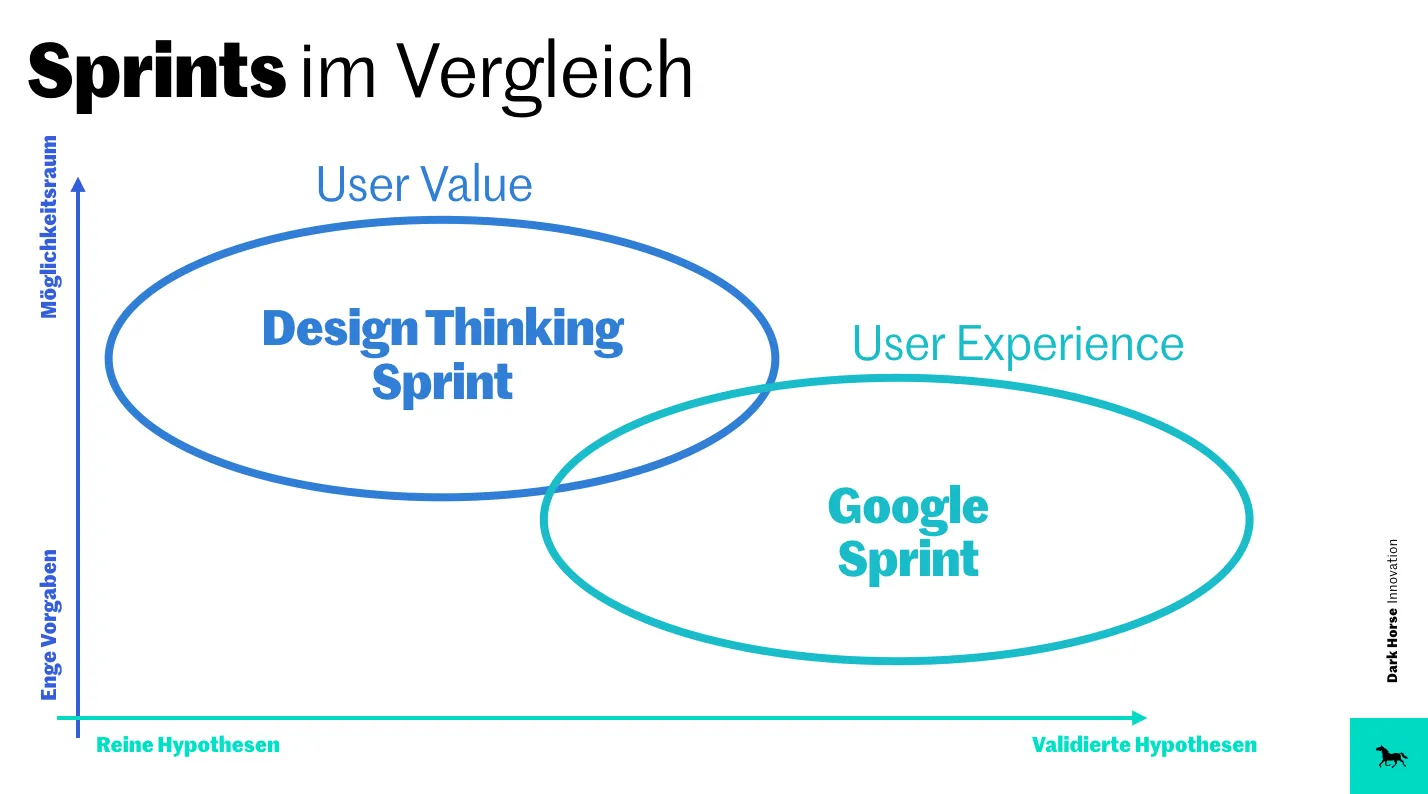
If, however, we do not have a clear understanding of the problem, also known as a fuzzy problem, and therefore do not have a clearly defined user or solution space, then it is worth using the exploratory and open character of the Design Thinking approach. So we do not start with the question “What should the user experience be?” Instead, we start with one or more open questions whose results have much greater room for exploration. We take care of the often neglected task of developing a clear understanding of the problem space and the users.
Good news: Design Thinking can also work as a sprint!
It is much more demanding to transfer the mindset-based and freer working style of Design Thinking into a standardized format. That does not work 100%. In a Design Thinking Sprint, not everything can be planned and ticked off like a checklist. We need to be able to improvise and reschedule spontaneously and use the creative energy inherent in the format.
It is therefore possible to implement Design Thinking in a standardized form, but it is more like a cookbook by Paul Bocuse. The founder of Nouvelle Cuisine used to write down only very vague instructions, which is why we need more practice and feel than in a Jamie Oliver bestseller.
Which sprint is better for me?
If the value proposition for the users or customers is clear, the Google Sprint offers a great follow-up format to work out the detailed functions of the solution. The transitions are fluid, also to a User Interaction (UI) Sprint, where the focus is then on shaping the concrete interaction (interaction design).
All of these areas can also be developed with the help of a Design Thinking Sprint. If you like improvising instead of following recipes, Design Thinking in sprint format offers flexibility and room to respond more individually to changing situations. The Design Thinking Sprint is always the method of choice when the problem is not yet completely clear.
For anyone who wants to explore more freely and therefore needs more flexibility, the Design Thinking Sprint is exactly the right place.
Design Thinking Sprint as a vague recipe
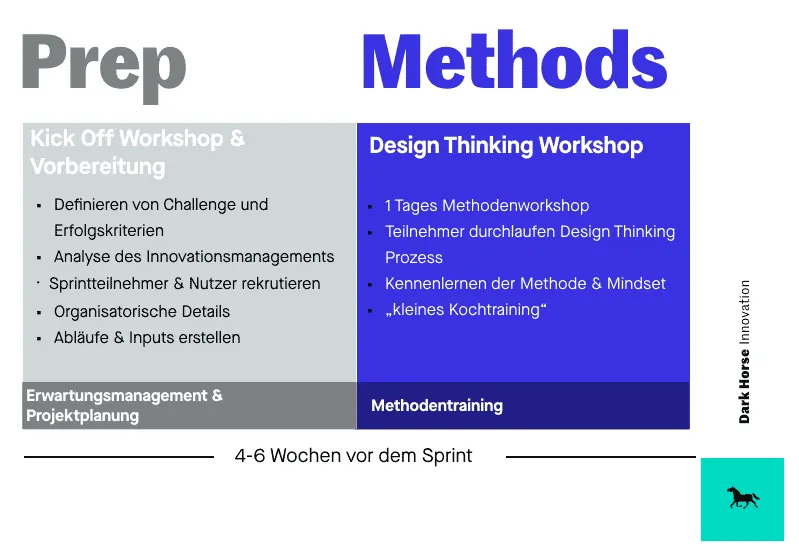
As a starting point, we need a well-defined challenge. To develop this in the end and dive into the topic and process, a kick-off takes place beforehand.
If the participants still need a refresher or training in methods, we recommend taking part in a one-day Design Thinking workshop to gather experience with the empathy mindset on an alternative exercise topic, either for the second time or for the first time.
We also recommend splitting the sprint into two work blocks (3 days “Explore & Create” and 2 days “Evaluate”), because in the first part of the sprint it is not yet clear which user we will focus on. Only after the Explore phase are we able to recruit suitable users and test participants.
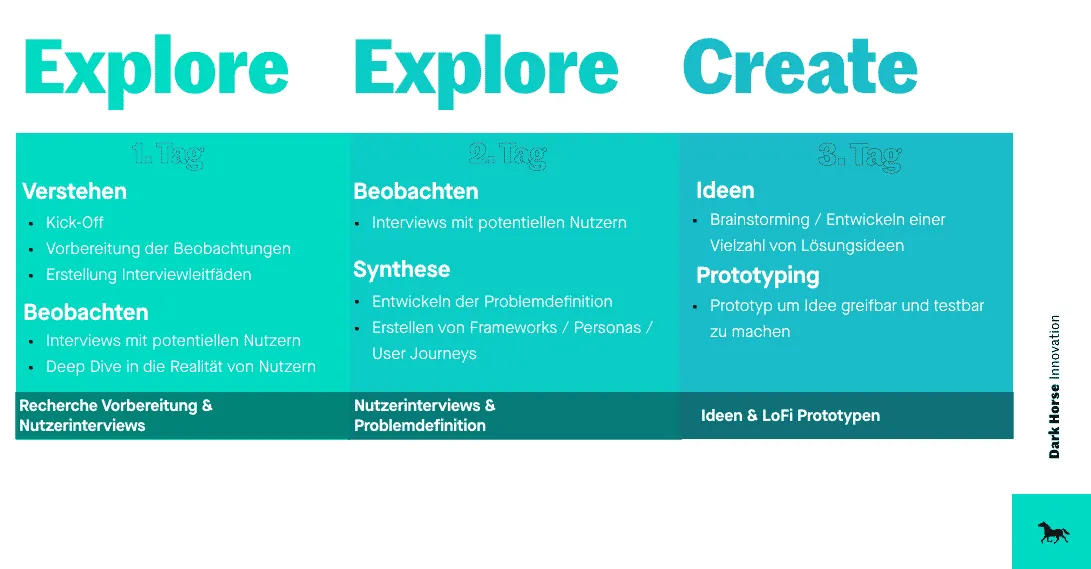
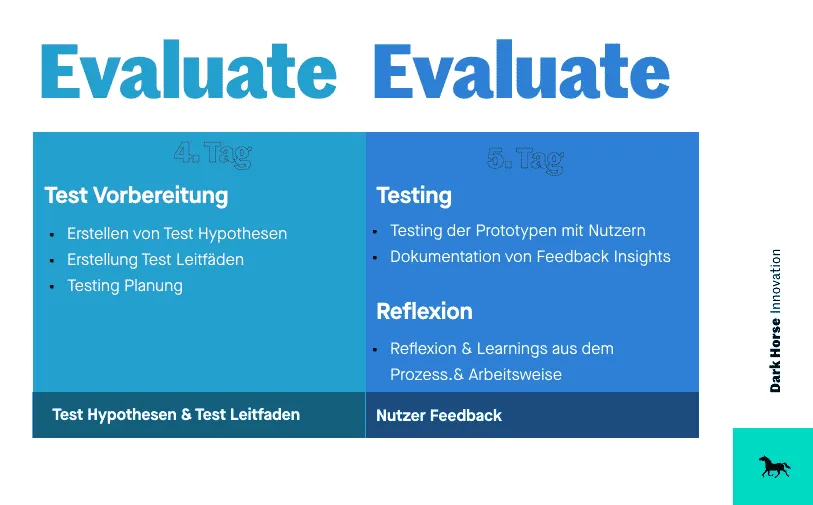
If this has sparked your interest, you can take a look at our cookbook for Design Thinking. There you will find details and explanations about the Explore, Create and Evaluate phases: www.digital-innovation-playbook.de
And if you would like to try yourself as a Design Thinking cook, feel free to visit our Academy.
Today nothing should go unquestioned: who exactly is this Dark Horse and why should I believe any of this?
We are innovation activists. We are accomplices.
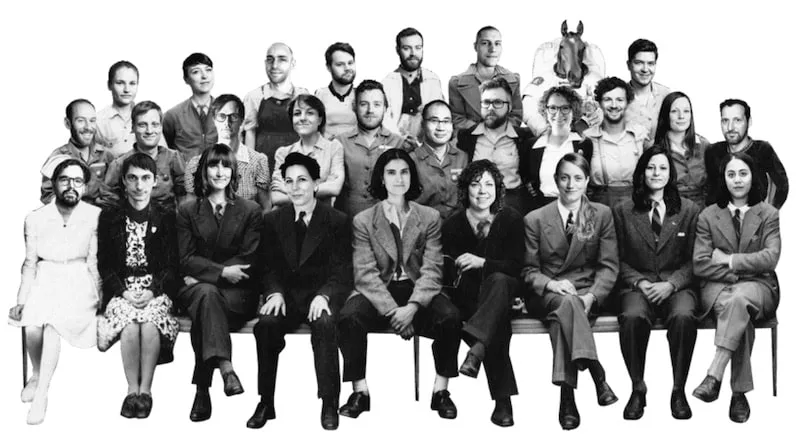
We help people and organizations shape their future properly. You can imagine Dark Horse as a saddled, roughly 30-headed hydra. Just somehow nicer. None of the heads is like the others. For more than ten years this creature has been fighting for the needs of our clients and their clients. And their clients. From NGOs to DAX corporations, we advise a wide range of organizations. With our self-developed framework, the Innovation Board, we develop product and service innovations that delight customers. We do this together as a team, without hierarchies, playfully, with a lot of fun and great passion.
If you would like to get to know us better, you can find us here.
FAQs
What should you know about sprint being a format, not a method?
What should you know about Design Thinking Sprint as a vague recipe?

![Agentic Engineering Hiring Interview 2026 [+21-Question PDF]](/_astro/agentic-engineering-interview-featured-de.BlvVAp5j_Z9ib7o.webp)